
Corporate Sprinter travel: write a better transport brief
By Checkmate Sprinters · Published
A corporate Sprinter brief should tell the operator who is traveling, where the group must be and when the vehicle needs to remain available. A list of meeting start times is not enough. Add loading points, expected end times and the person who can approve changes during the day.
Turn the calendar into movements
Create one row for each pickup and drop-off, with the location, time, guest count and on-site contact. Distinguish a meeting start time from the arrival deadline; passengers may need time to enter a building or collect credentials. Ask the operator to review the route sequence before locking the schedule.
A corporate roadshow can involve waits between meetings. State whether the group expects the van to remain nearby or whether separate transfers are acceptable. That choice changes the service being quoted and should be settled before comparing prices.
Build a useful passenger manifest
Record the total headcount for every movement, not just the total attendees at the event. Some guests may arrive separately, leave early or travel with equipment. Provide the operator only the contact and passenger information needed to deliver the service.
Choose one travel coordinator as the primary contact and one person traveling with the group as the on-the-day contact. Share a clear process for changes so a request from one passenger does not accidentally alter the itinerary for everyone.
Specify workspace requirements realistically
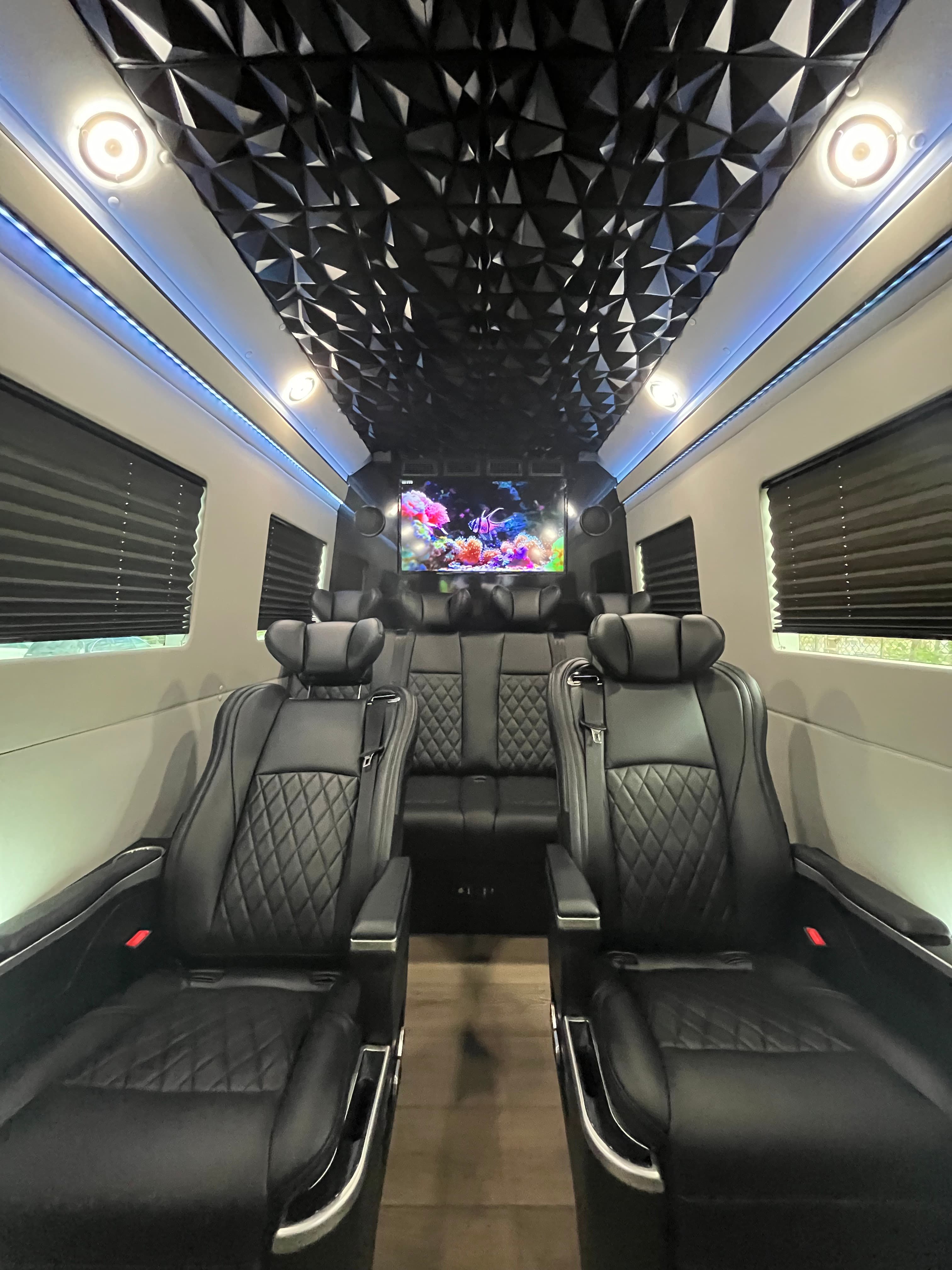
If passengers need to talk or work during the journey, review the actual seating and table arrangement. Check power and connectivity features on the proposed model. Treat mobile connectivity as something to confirm for the trip, rather than a guarantee that every call will remain uninterrupted.
A premium cabin can be useful for a small team, while an Executive layout may better suit a larger group. Check the bag and equipment load before choosing on appearance. Product cases or event materials can take substantially more room than personal luggage.
Put billing and change authority in writing
Ask for a proposal showing the booked service, minimums, included items and extra-time terms. Identify who can authorize a schedule extension and how that approval is recorded. A vehicle arranged for one transfer should not be expected to cover an additional evening event without confirmation.
If your organization needs a particular invoice format, purchase order or payment process, ask whether the provider supports it before booking. Do not assume that all transport companies have the same corporate-account arrangements.
- Billing contact and required reference or purchase-order number.
- Authorized change contact and backup.
- Confirmed service hours and additional-time terms.
- Cancellation deadline and final passenger-count deadline.
Send a brief that can become the confirmation
Use this structure: trip dates; service model; movements with times and addresses; guest and bag counts; required features; access instructions; billing needs; and change contacts. Ask the provider to return its proposal against that same structure.
For airport arrivals, attach the flight list and meeting instructions. For conferences, confirm the venue loading area with the organizer. Keep the final version with the group lead, and send changes to the transport provider rather than only updating the internal calendar.