
Wedding Sprinter shuttles: build a workable timeline
By Checkmate Sprinters · Published
A wedding Sprinter plan starts with the number of guests who actually need each ride and the time they must arrive. Work backward from the ceremony or venue deadline, then allow for loading, the confirmed route and the vehicle’s return. The first departure time alone does not describe a complete shuttle plan.
Separate the passenger groups
The wedding party, family members and hotel guests often travel on different schedules. Put each movement on its own line: pickup point, guest count, departure deadline and destination. That prevents a vehicle booked for photographs from also being expected to run a hotel shuttle at the same time.
Ask guests whether they intend to use the shuttle. A hotel room block is not a transport manifest. Include children and tell the operator about equipment or boarding needs before selecting the van.
Calculate the full shuttle loop
For a repeating shuttle, count loading at the hotel, travel to the venue, unloading, the return journey and loading for the next group. Ask the operator for a route estimate appropriate to the actual day and time. A ten-minute drive does not create a ten-minute shuttle cycle.
For example, a planning scenario with ten minutes to board, twenty minutes to travel, five minutes to unload and twenty minutes to return uses fifty-five minutes before the next boarding begins. These are illustrative inputs, not a route estimate. Replace them with the operator’s timing and leave room for the venue’s arrival requirements.
Confirm the curb, entrance and staging area
Give the operator the entrance guests should use, rather than only the venue’s postal address. Ask the venue where a Sprinter can unload and where it can wait. A driveway that works for a small car may have different clearance or turning considerations for a van.
Name a person who can resolve access problems on the day. Share that contact and the transport contact with the planner. Keep the passenger instructions simple: pickup location, boarding time and whom to call if they miss the departure.
- Hotel pickup point and an agreed boarding window.
- Venue entrance and permission to unload or wait.
- Guest count for every movement.
- A planner contact who is not occupied in the ceremony.
Plan the return before guests arrive
Confirm whether the return is a single departure, several scheduled departures or a reserved charter period. Guests who want to leave early and guests staying to the end can create different transport needs. Decide how those needs will be handled before the celebration.
Ask what happens if the reception runs late, who may authorize extra service and how it is charged. A vehicle leaving after the final confirmed trip should not be mistaken for an open-ended shuttle. Include the final departure in the guest information.
Choose the vehicle for the movement
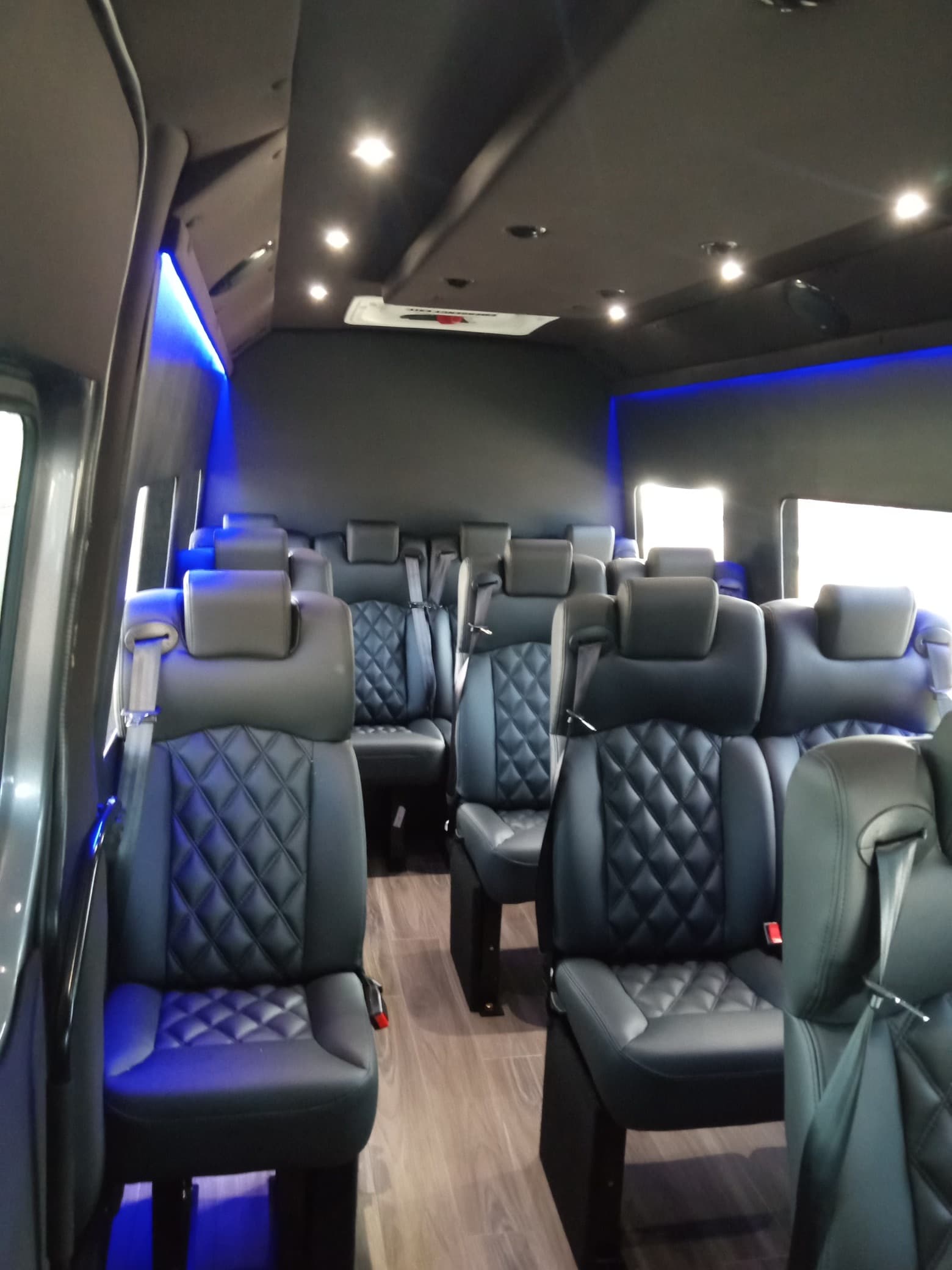
A guest shuttle may prioritize seats, while the wedding party may prefer more individual space. Review actual Executive and Jet layouts. Flowers, attire and overnight luggage can change the loading needs even when the passenger count stays the same.
Checkmate offers chauffeured Sprinter inquiries for wedding travel. Send the movement list, guest counts, venue instructions and return plan together so the proposal covers the full event. Ask for the exact vehicle or suitable equivalent to be confirmed with the booking.